| |
|
|
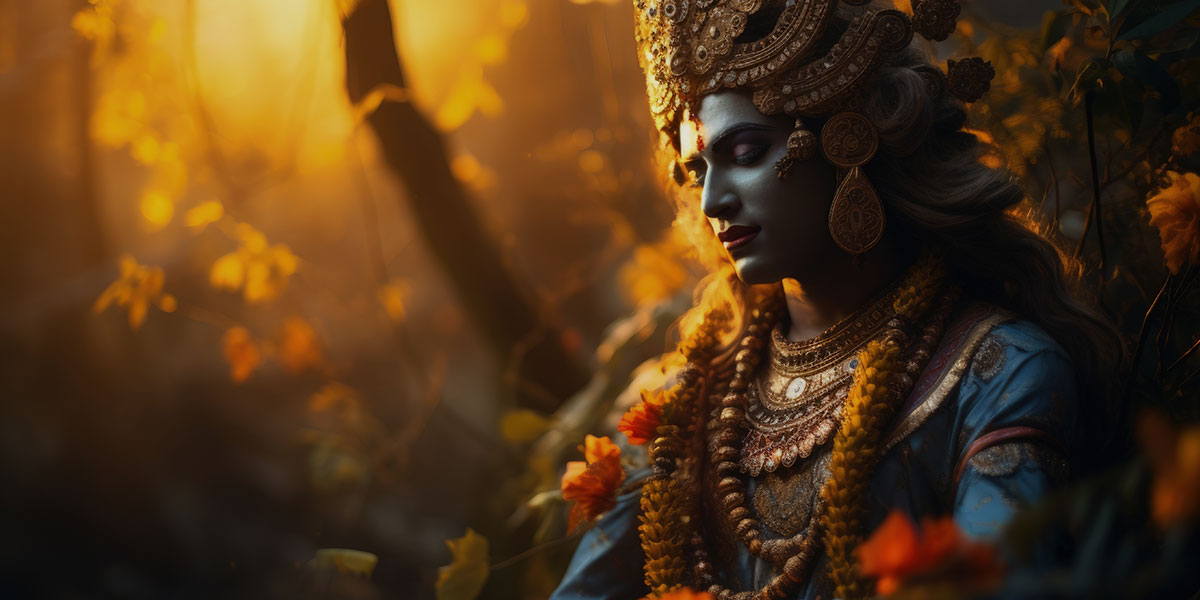
The Bhagavad Gita
The Bhagavad Gita, also called the "Song of God," is a 700-verse dialogue set on the battlefield of Kurukshetra between the warrior prince Arjuna and Lord Krishna, who serves as his divine charioteer. It is widely considered the greatest wisdom book of all time because it serves as a universal anthology for the human experience, transcending religious boundaries to offer a practical "inner technology" for navigating life's most intense moral and existential crises.
By synthesizing various spiritual paths-including the yoga of action (Karma Yoga), knowledge (Jnana Yoga), and devotion (Bhakti Yoga)-the Gita teaches how to perform one's duties with total commitment while remaining detached from results and expectations. This timeless message of maintaining inner equanimity amidst external chaos has inspired many persons including Mahatma Gandhi, providing a definitive guide of Divine Wisdom for anyone seeking self-realization, mental mastery, and a life of purpose.
 https://www.youtube.com/watch?v=mjQCrgDK-HQ

Karma Yoga - Man is the creator of his own destiny
The true law of karma is not a divine court room, but an eco-system of consciousness and growth. It is the law of 'cause and effect (you reap what you sow). In the Bhagavad Gita, Lord Krishna reveals how our actions shape our future. When we perform Nishkama Karma without attachment to outcomes, we find true mental clarity. Action becomes a path to inner peace rather than a source of anxiety. Like a lotus leaf in water, we can engage fully in life while remaining completely untouched by sorrow.
https://www.youtube.com/watch?v=qfSTQl20r8E
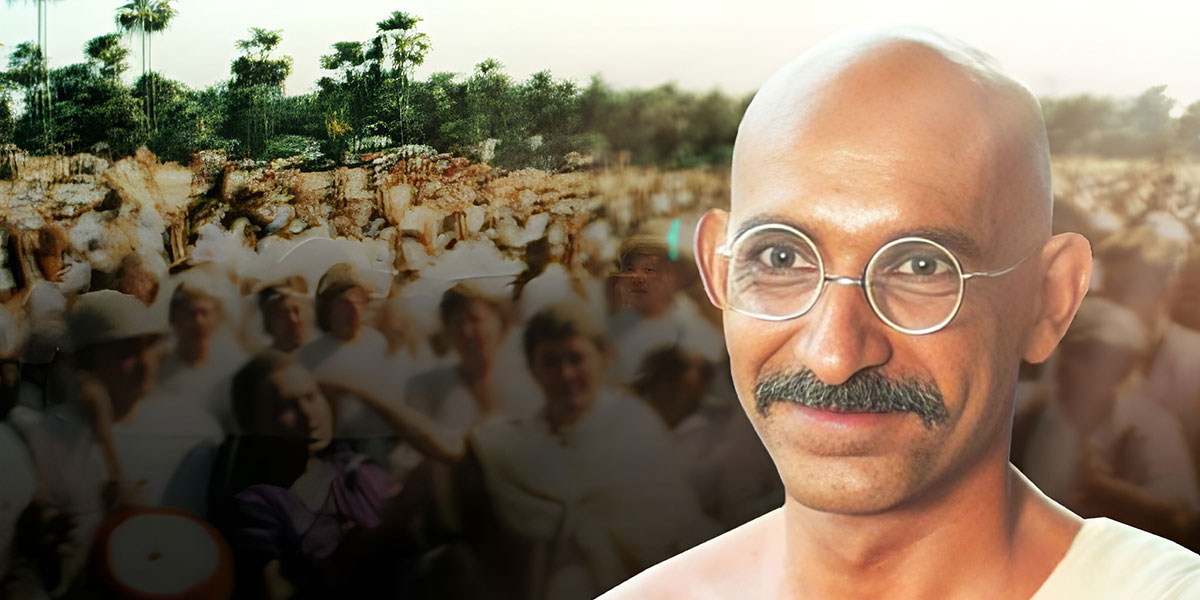
Gandhi Movie (1982)
Experience the powerful story of Mahatma Gandhi in the 1982 Academy Award-winning film Gandhi, directed by Richard Attenborough and starring Ben Kingsley in a legendary performance. This historical drama chronicles Gandhi's journey from a lawyer in South Africa to the leader of India's non-violent independence movement. The film captures key events such as the Salt March, Quit India Movement, and his philosophy of satyagraha.
https://www.youtube.com/watch?v=awmxHuTXslw
7 Stories from the Upanishads that prove your reality is wrong
- No compromise with truth (story of Sathyakama Jabali from Chandogya Upanishad)
- Have the courage to ask the right questions (Dialogue between Gargi and sage Yajnavalkya from Brihadaranyaka Upanishad)
- Always walk on the right path, not on the attractive path (Test for Indra and Virochana from Chandogya Upanishad)
- Have unwavering determination and tremendous patience (Indra's penance for 101 years from Chandogya Upanishad)
- True happiness lies in renunciation (Detachment of king Janaka and message of Isha Upanishad)
- We are all One - Tat Tvam Asi (Teaching by Uddalaka to son Svethaketu from Chandogya Upanishad)
- True wealth is self-realization (Dialogue between Maitreyi and sage Yajnavalkya from Brihadaranyaka Upanishad)
https://www.youtube.com/watch?v=NsW8K3X5Heg
Ancient Hindu Scriptures Explained
Hinduism has no single holy book. No one founder, no one starting point, no single scripture everyone must accept. So what are the Hindu scriptures - and why do they still matter?
This video is an introduction to the ancient Hindu scriptures: the four Vedas (Rig, Sama, Yajur, Atharva), the astonishing oral tradition that preserved them, the Sanskrit language and PÄṇini's grammar, the Upanishads and the ideas of Atman and Brahman, the great epics - the Ramayana and the Mahabharata - the Bhagavad Gita and Krishna's teaching to Arjuna on dharma, karma, jnana and bhakti, the three gunas (sattva, rajas, tamas), and the Puranas with their gods, goddesses, avatars and vast cycles of cosmic time.
https://www.youtube.com/watch?v=iO-rLrorzJ4
Hinduism (Not about God, but about you! Not a religion but a mirror)
What if Hinduism was never meant to be followed as a religion… but understood as a system for awakening human consciousness? This video explores Hinduism through a modern psychological framework, not as blind belief, not as mythology, but as an ancient technology designed to reduce suffering, dissolve ego, and reveal inner awareness and life's purpose.
https://www.youtube.com/watch?v=wNYAwSyEniQ
The Upanishads - chronological order of major texts explained
The below video walks through major Upanishads in the exact chronological order they were composed - and when you read them in order, they stop being random poetry and become a single, mechanical philosophical argument building century after century toward one terrifying realization: a three-word equation engineered to dissolve the ego and cure anxiety at its root. Tat Tvam Asi. Thou art That.
It starts with Brihadaranyaka Upanishad with Neti Neti (not this, not this) approach negating everything including body and mind until what remains is the undeniable existence (Brahman).
Chandogya Upanishad: Through famous parables-such as dissolving salt in water or splitting a banyan tree seed-the Upanishad demonstrates that an invisible, pervasive essence (Brahman) underlies all physical reality.
Katha Upanishad: If the universe is pervaded by Brahman, what is the position of an individual person? Katha Upanishad answers this question and also about what happens after death. Lord of death, Yama explains to Nachiketha that body and mind perishes but what remains is Atman, the true Self.
Kena Upanishad: If the eternal Atman is inside us as explained in Katha Upanishad, why do we feel fear and anxiety? Kena Upanishad starts with questioning by whose command the faculties of mind and senses such as eye and ear function. Then it answers that Brahman is the power behind all these faculties.
Isha Upanishad explains that this entire universe is pervaded by Brahman. We must renounce attachment to the world and expect to live a hundred years by working selflessly.
By now sages have introduced two concepts Brahman and Atman. Atman is a part of Brahman. But why we experience the diversity in the creation?
Taittiriya Upanishad, to explain the above, tells about the five sheaths of an individual self. 1. Annamaya Kosha (the physical body) 2. Pranamaya Kosha (the vital energy) 3. Manomaya Kosha (the mental layer) 4. Vijnanamaya Kosha (the intellect) and 5. Anandamaya Kosha (the bliss sheath). We suffer because we falsely identify with the outer layers such as physical body. But our true Self, Atman lies in the inner most.
But how do we actually experience the Atman?
Mandukya Upanishad, to explain the above, divides human consciousness into four states - Waking, dreaming, deep sleep and Turiya. Turiya is the state where you carry your egoless consciousness (experienced in deep sleep) into wakeful existence.
Upanishads say the Atman is Brahman, Tat tvam asi (you are That). Brahman is the universe viewed from outside. Atman is the universe viewed from inside, just like a tiny drop of water and ocean.
https://www.youtube.com/watch?v=45SXp9JrDL8
Brihadaranyaka Upanishad - How to realize your true Self?
'Brihadaranyaka' literally translates to the great forest book. In a famous discourse, Yajnavalkya tells his wife Maitreyi that love for any worldly object or person is conditional, driven by the love for the true Self (Atman) residing within all. The fundamental message of the text is Aham Brahmasmi ("I am Brahman") - the realization that the innermost core of an individual (Atman) is identical to the infinite, absolute reality (Brahman). The Upanishad uses the method of negation, Neti-Neti (Not This, Not This), stripping away physical, sensory, and mental identifications to reveal pure consciousness.
https://www.youtube.com/watch?v=XeY3s78uueM
Chandogya Upanishad - Meaning of Tat Tvam Asi (You are That)
The story of Uddalaka and Shvetaketu teaches us to recognize the essence behind every object. Just as clay remains the same regardless of the form it takes, the Absolute Truth remains one despite the many names and forms we perceive. Even in deep sleep, we return to that source, yet ignorance makes us forget our true nature when we awaken.
https://www.youtube.com/watch?v=EH_ShCD02WQ
Katha Upanishad - The secret of immortality
Lord of death, Yama tests Nachiketa with worldly temptations, but the boy rejects transient pleasures (Preyas) in favor of the ultimate spiritual good (Shreyas). Then Yama teaches that the true Self (Atman) is eternal, birthless, deathless, and all-pervading. It is distinct from the physical body, mind, and intellect. The text compares the human body to a chariot. The Chariot represents the physical body and the individual soul (Atman) is the passenger.
https://www.youtube.com/watch?v=PwcmZAf2p-A
Kena Upanishad - Who Controls the Mind?
Have you ever stopped and asked yourself - who is really controlling my mind? This is not just a philosophical question, it is the most powerful question a spiritual seeker can ask. The kena upanishad from the sama veda begins with exactly this inquiry, and the answer it reveals about advaita vedanta and the source of consciousness will transform how you see yourself and the entire universe.
https://www.youtube.com/watch?v=KCpm0K7jgQQ
Ishavasya Upanishad - Everything is enveloped by God
This Upanishad opens with the declaration that the entire universe is enveloped and pervaded by the Supreme Lord (Isha). It instructs seekers to enjoy life and fulfill responsibilities through renunciation of ego and greed, reminding us not to covet anyone else's wealth. It teaches a balanced life where performing selfless duties (karma) purifies the mind, while spiritual knowledge (vidya) leads to self-realization and immortality. All such people who only believe in physical body but not in the existence soul, enter Asuric or demonic worlds.
https://www.youtube.com/watch?v=kIdFPRHag9A
Taittiriya Upanishad - The five Sheaths that define your real identity
This Upanishad introduces the core concept of the Pancha Kosha (Five Sheaths) that cover the true Self:
- Annamaya Kosha: The physical body
- Pranamaya Kosha: The vital energy or breath
- Manomaya Kosha: The mental layer
- Vijnanamaya Kosha: The intellect
- Anandamaya Kosha: The bliss sheath
https://www.youtube.com/watch?v=nMxjNfFhoxQ
Mandukya Upanishad - The Four States of Consciousness
This Upanishad opens with the declaration that the entire universe is the syllable Om, and everything is ultimately Brahman (the absolute reality). The individual self (Atman) is identical to the universal reality (Brahman). It explains the below four states of human consciousness.
- Waking State (Jagrat / Vaishvanara): Consciousness is turned outward. The self experiences gross, physical, external objects through the senses. This corresponds to the letter 'A' in Om.
- Dream State (Svapna / Taijasa): Consciousness is turned inward. The self experiences subtle mental impressions and creates an inner dream world using memories of waking experiences. This corresponds to the letter 'U' in Om.
- Deep Sleep State (Sushupti / Prajna): A state of undifferentiated rest where there are no desires or dreams. The mind rests in a blanket of unmanifest ignorance and bliss, yet without conscious perception of objects. This corresponds to the letter 'M' in Om.
- The Transcendent State (Turiya): The fourth underlying reality. It is pure, unchanging, unconditioned awareness beyond waking, dreaming, and deep sleep. It is neither outwardly nor inwardly cognitive, but is the silent background that witnesses all three. This corresponds to the Silence following the sound of Om.
https://www.youtube.com/watch?v=qBYLHLFrDzk
Mundaka Upanishad - Two types of knowledge and only one sets you free
"Mundaka" means shaven-headed, symbolizing that the text shaves away ignorance like a razor. Lower knowledge (aparÄ vidyÄ) includes rituals, grammar, sacrifices, and worldly sciences. Higher knowledge (parÄ vidyÄ) is the direct realization of the imperishable Brahman (the ultimate cosmic reality). This Upanishad features the famous analogy of two birds sitting on the same tree. One bird eats the sweet and bitter fruits (representing the individual ego experiencing pleasure and pain), while the other watches silently without eating (representing the inner Self or Atman as an unaffected witness). Liberation comes when the active soul realizes it is identical to the witnessing Self.
https://www.youtube.com/watch?v=Lsaqh5k27cY
Aitareya Upanishad - Origin of creation and the descent of the Self or Atman
Before creation, only the Atman (the supreme Universal Self or Consciousness) existed. Nothing else stirred. The Atman willed to create the worlds (the oceans, light, the mortal earth, and the nether regions) using cosmic heat (tapas). From the waters, Atman shaped a cosmic human form (Purusha). The gods (representing cosmic principles) entered the human form's faculties (e.g., Agni into the mouth/speech, Vayu into the nose/breath, Surya into the eyes/sight). Atman created hunger and thirst, establishing food as the sustaining principle for all living creatures. Seeking an abode, Atman split the crown of the head and entered the human body as the indwelling spirit, making the human body the supreme temple of consciousness.
https://www.youtube.com/watch?v=bCibq_jttAM
The true meaning of Yoga: Why you are doing it completely wrong
True yoga is not about just physical postures or gymnastics. Sage Patanjali's Yoga sutra starts with 'Yogah chitta vritti nirodah' meaning control over mind. When you achieve that you will abide in true reality and happiness.
https://www.youtube.com/watch?v=yKX7n-wBZ8E
Yoga Vasistha: Secrets of 108 Upanishads and 7 life-changing vedantic truths
When Lord Rama asked his guru Sage Vashishtha, "What is this world? Who am I?", the timeless answers revealed the path to self-realization and liberation while living (Jivanmukti).
- This world is an extension and imagination of our mind. To change our circumstances we must change our thoughts and emotions.
- Just as we are not disturbed by the pleasures and pains experienced in dream, we should not be disturbed by them in wakeful state too. They are just a temporary play of the mind. That which witness the our usual three states - wakefulness, dreaming and deep sleep – is called Atman or Consciousness and can be experienced in the fourth state of Turiya.
- A person eligible to walk on the path of liberation must have mumukshatva (a strong desire to be free from suffering and four great means called sadhana chatusthaya.
- Mind should be purified free of greed, hatred, jealousy and so on.
- There are seven stages of knowledge called Sapta Jnana Bhumika
- Brahman and the Universe are one. Atman is a tiny water drop or wave of mighty ocean called Brahman.
- Jeevanmukti (liberation while living) - A liberated person performs all worldly activities just like an actor performs like a king or beggar, inwardly knowing he is only a witness. Life is just a game to him.
https://www.youtube.com/watch?v=eGH5_UMSBVU
What is the purpose of life?
The path described in this video is not reserved for monks or renunciates - it begins right here, in your own daily life. With Sakshi Bhav (Witness-hood) as your mindfulness anchor and Karma Yoga as your approach to every action, each day becomes a living practice of Vedanta - a steady step toward Jivanmukti, liberation while still fully alive. This video explains the four purushardhas (goals of life) - dharma, ardha, kama and moksha to live a balanced life. It also tells to see Brahman in all people and perform daily activities as selfless service to God.
https://www.youtube.com/watch?v=xYoe_7tIQc4
Bantu reethi kolu (Service as God's royal guard)
This classic song is a devotional composition by the saint-composer Tyagaraja in which he pleads with Lord Rama to grant him the job of a royal guard just to remain eternally in His divine presence.
Line-by-Line Meaning
- Pallavi (Refrain): Bantu reethi kolu viyyavayya Rama
- Meaning: O Lord Rama, please bestow upon me the privilege and job (kolu) of being your faithful servant and guard (bantu reethi).
- Anupallavi (Sub-refrain): Tunta vinti vaani modalaina madaa dula gotti nela goola jeyu nija
- Meaning: Grant me the true duty of a guard who is empowered to strike down and destroy the inner enemies-the six passions (Arishadvargas)-starting with desire (kama, symbolized as the wielder of the sugarcane bow/Cupid), anger, greed, attachment, pride, and jealousy.
- Charanam (Stanza): Romaanca manu ghana kancukamu Rama bhaktudanu mudra billayu Rama naama manu vara khadga mivi raajillu naiyya tyaagaraajuni ke
- Meaning: Equip me with the heavy armor of divine ecstasy (romanca), the royal badge/emblem stating I am a devotee of Rama (Rama bhaktudanu mudra billa), and the supreme sword of Rama's holy name (Rama naama). Grant these ornaments of devotion to shine upon Tyagaraja.
https://www.youtube.com/watch?v=smf7rx-jPMw&list=RDsmf7rx-jPMw&start_radio=1
Namo namo Bharatambe (Prostrations to Thee, O! Mother India)
This Sanskrit patriotic hymn is a deep devotional and poetic tribute to Mother India, praising her physical grandeur, sacred geography, and supreme spiritual legacy.
Verse-by-Verse English Translation
- Embodiment of Wisdom: Salutations to Mother India, who is the very embodiment of knowledge (Sarasvata), revered by the entire world, and who shines brightly with the highest realization of spiritual truth (Brahmavidya).
- Crowned by the Himalayas: Prostrations to the Mother who wears the majestic Himalayas as her crown, from whom sacred and nourishing rivers like the Ganga flow to purify the world.
- Sanctified by Sages: Salutations to the land adorned by holy places like Badari and enriched by the dust touched and purified by great enlightened sages.
- Nature's Scenery: Prostrations to the Mother who has the Vindhya mountains as her bosom, the great ocean as her garment, and the Sahyadri ranges as her garland.
- The Global Guru: Salutations to Mother India, the supreme teacher (guru) of the world, whose profound wisdom through the Vedas and Upanishads grants the ultimate bliss of liberation (moksha).
https://www.youtube.com/watch?v=9CTMEvnSJPI&list=RD9CTMEvnSJPI&start_radio=1
|
|
|
|
|